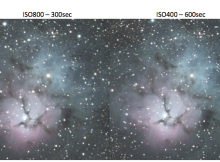
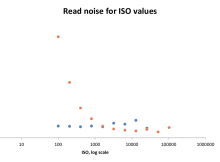
In the previous article about the best ISO setting for astrophotography, I’ve explained what ISO is, how it works in digital camera’s and how to determine the best
With astrophotography we are in a constant battle with unwanted signal, trying to capture the faintest signals from space and get it to stand out above the noise.
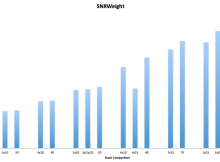
The question if stacking all subs at once will give you the same result as stacking subs into subsets and stack those subsets together is one that pops
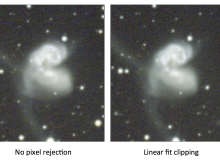
When photographing the night sky we get all kinds of artefacts in our images; planes flying through our field of view, leaving a trial of 3 stripes because
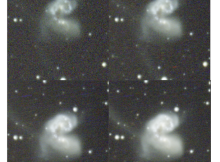
Adding multiple exposures to create a single image is one of the key elements of doing astrophotography. It enables us to get rid of bad pixels, satellite trails,
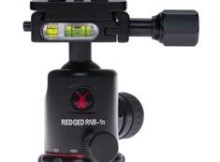
For my astro-holiday to Namibia I wanted to have an extra ball head. Preferably something small and light for traveling and keeping the weight down on the mount.
This beautiful wide field of view of Scorpion’s tail contains the famous cat’s paw and lobster nebula’s along with the ‘prawn’ nebula at the bottom. Near the Prawn